Laboratories
Information regarding the laboratories of the Electrical-Electronics Engineering Department is given below.
1. Circuit Analysis Laboratory
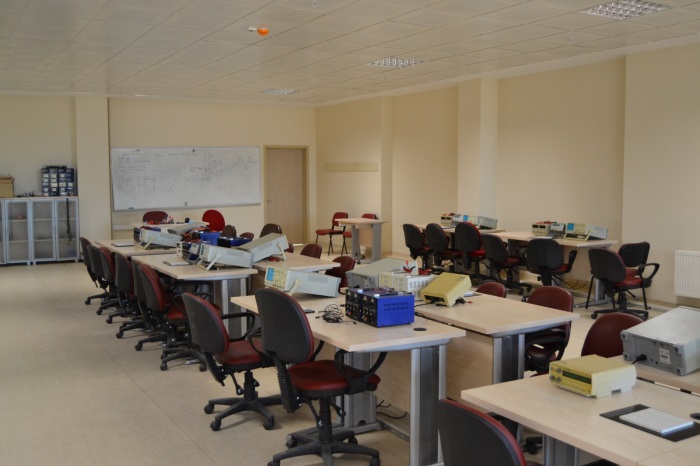
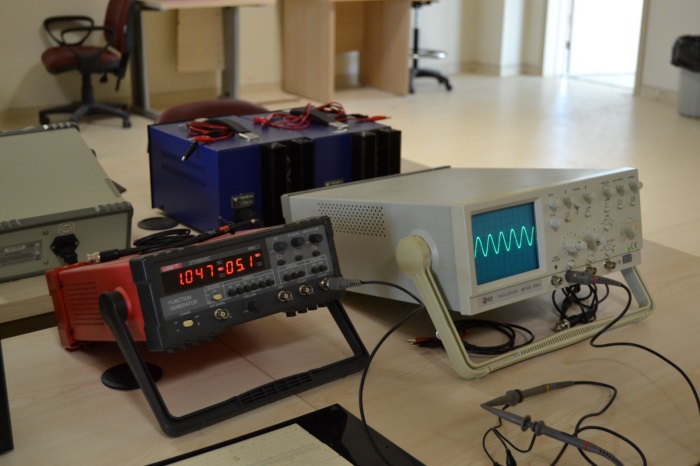
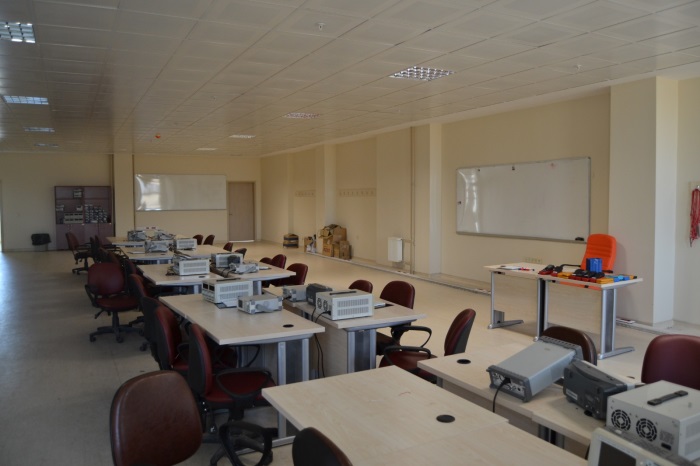
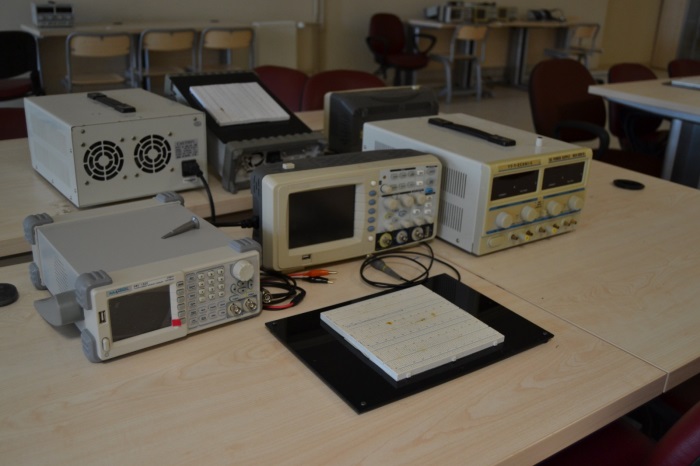
Experiments conducted include determination of resistor values with resistor color codes, basic filtering with Op-amps, Op-amp amplifiers, use of measuring instruments, node-voltage method applications, mesh-current method applications, use of an oscilloscope, current-voltage-power measurements in AC circuits, power factor correction, maximum power transfer in AC circuits, power analysis in AC circuits, and investigation of transient states in RC circuits.
2. Logic Circuits Laboratory
Experiments conducted include building basic logic gate circuits with diode and transistor elements, realizing logic functions with basic gate circuits, Karnaugh diagrams, subtractors and adders, half adder, half subtractor, full adder, full subtractor, parallel adder, encoder, decoder, multiplexer, and selector experiments.
3. Analog Electronics Laboratory
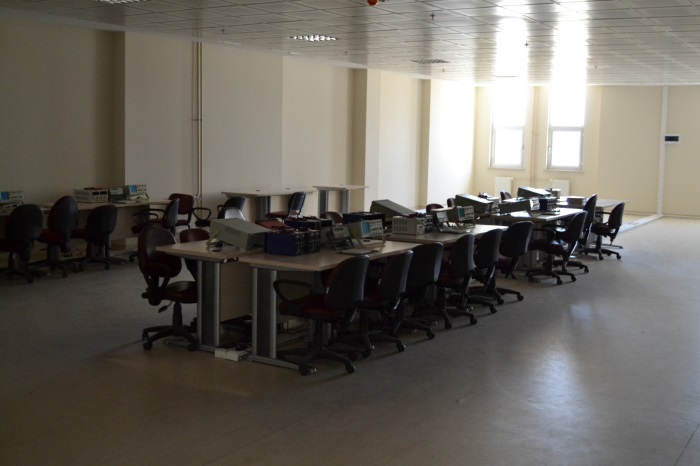
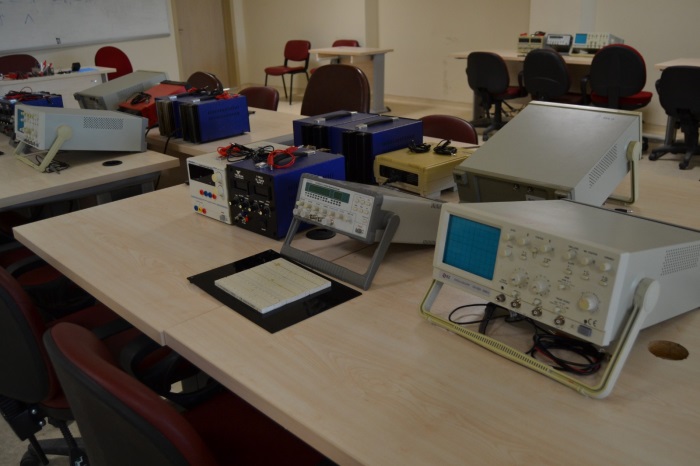
Following the introduction of the devices to be used in the lab with an RLC circuit; experiments conducted include basic diode applications (clippers, clampers, half-wave rectifier, full-wave rectifier), half-wave rectifier and full-wave rectifier circuits with transformers, the concepts of active region, cut-off region, and saturation region of transistors, dc load line and dc analysis of transistors, analyses of common-emitter, common-collector, and common-base circuits in BJTs, the concept of bandwidth in transistors, basic circuits with op-amps, cascade amplifiers, and active and passive filter experiments.
4. Digital Electronics Laboratory
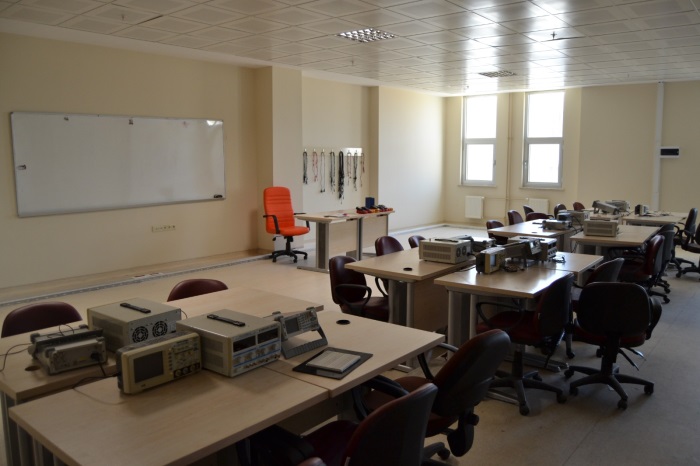
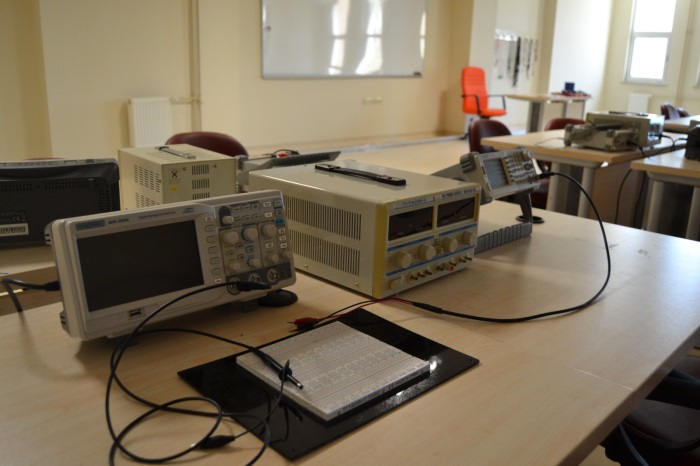
Designing multivibrator circuits, synchronous and asynchronous counters, shift registers, and digital-to-analog and analog-to-digital converters are demonstrated and their practical applications are performed.
5. PLC Laboratory
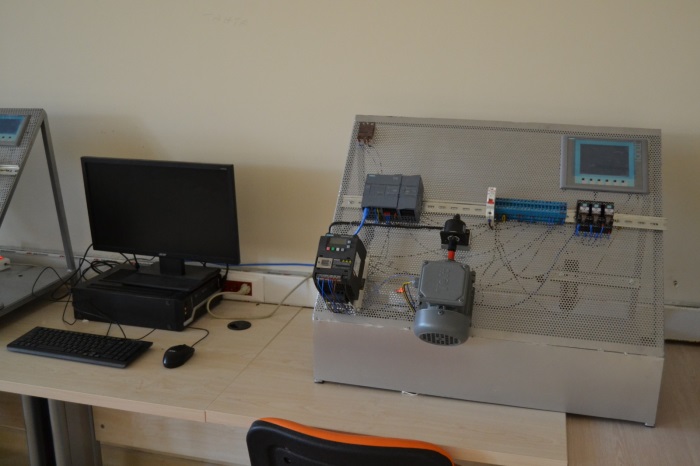
Information is provided and experiments are conducted regarding the structure and connections of the PLC, understanding programming logic in the PLC (ladder diagram, statement list, function block diagram), special type relays (set and reset relays), triggers, timers (TON, TOF, and TONR types), counters (up counters, down counters, and up-down counters), comparison contacts, and move commands.
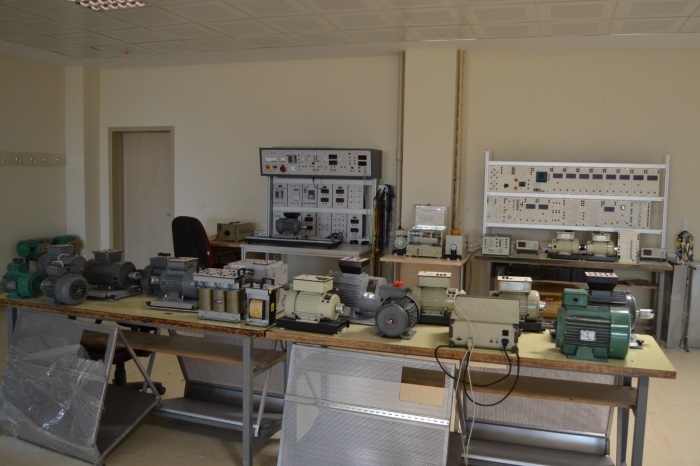
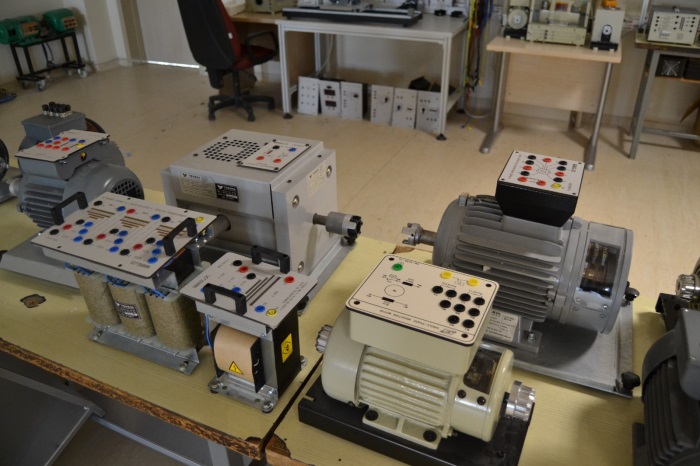
6. Electrical Machines Laboratory
Experiments conducted include the no-load and loaded operation of dynamos and DC motors; no-load, loaded, and short-circuit operation of transformers, asynchronous motors, and alternators, as well as starting synchronous motors, motor curves, and power factor correction with synchronous motors.
7. Computer Laboratory
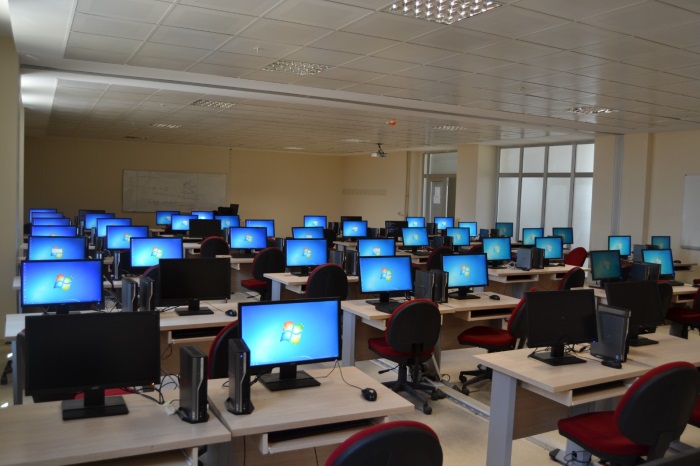
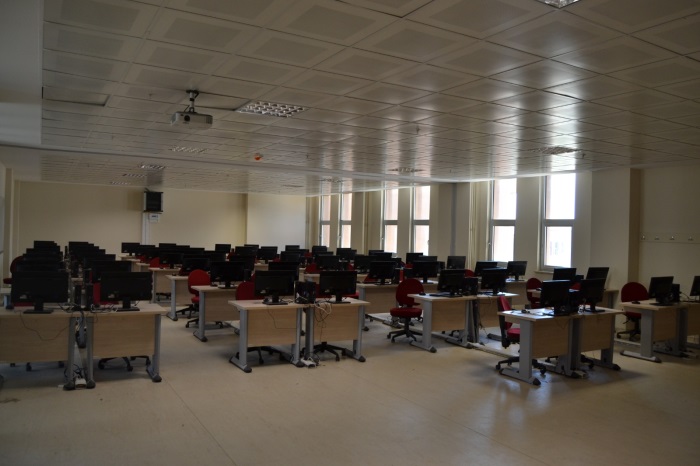
The laboratory, which has 60 computers, offers our students an environment to practice computer hardware and software, the use of information technologies, algorithms, and computer programming.